How can you tell if the peptides you bought are real?
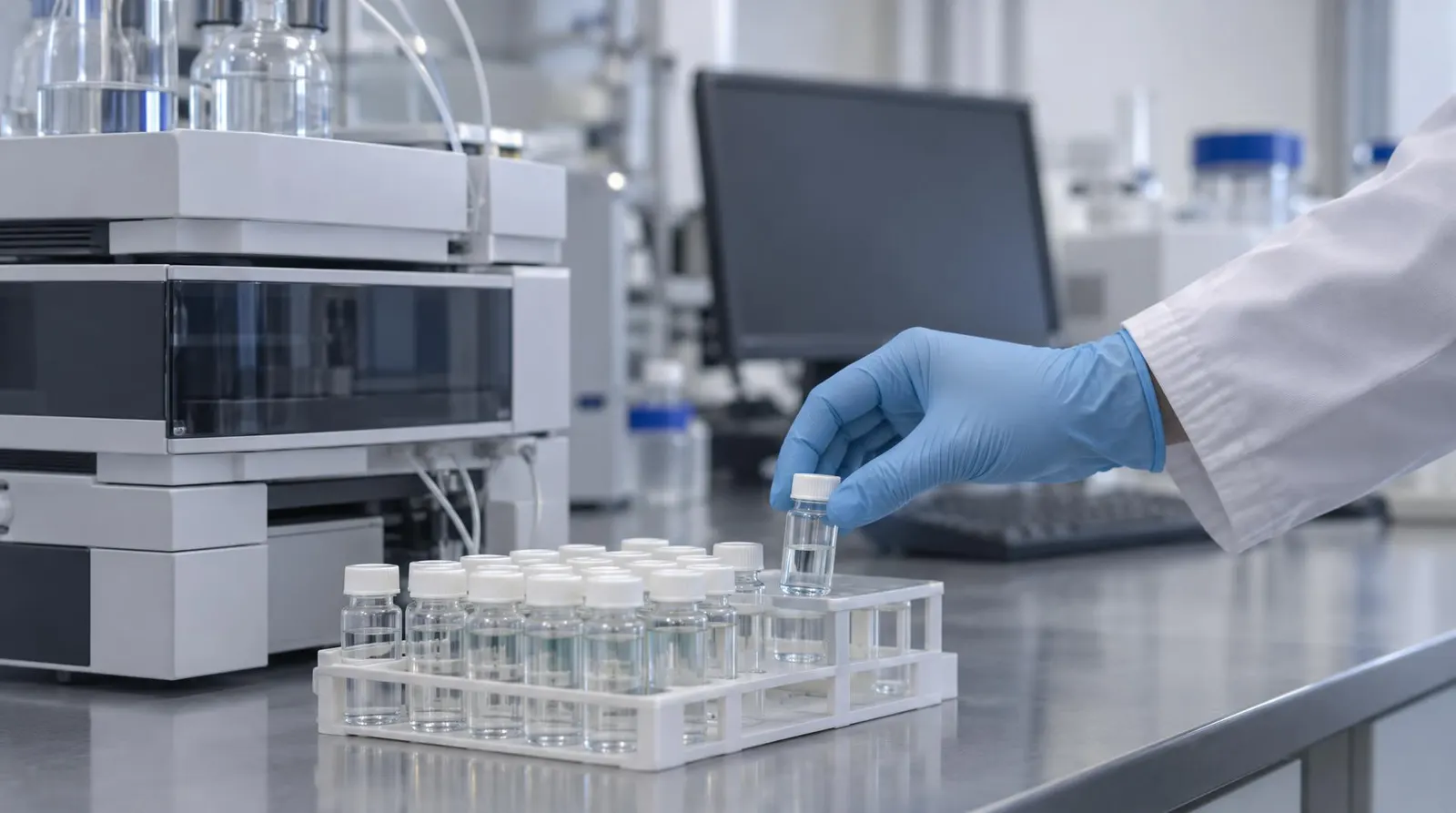
You can't tell whether a peptide is real by looking at the vial. You tell by matching the lot number on the vial to a certificate from a named lab, reading its identity line, purity line and measured amount against the label, and then looking the report number up at the lab that issued it.
Can you tell anything from the vial itself?
No. A glass vial, a stopper, a label and a cake of freeze-dried powder look the same whether the contents match the label or not, and a label is just text somebody typed. The powder is freeze-dried so it ships stable, as Pure Pet Peptide's note on why peptides ship as freeze-dried powder explains, and one freeze-dried cake looks much like another whatever it holds.
The published checks aren't reassuring, though none is a horse study. French chemists tested 110 products seized from the black market. Of the 75 pharmaceuticals, 25 (33 percent) were substandard in amount and 24 (32 percent) were counterfeit, meaning the contents did not match the label (Fabresse et al., 2021, Forensic Science International). Mostly steroids. A 2024 purchase study bought three semaglutide vials from online sellers that required no prescription and measured purity between 7.7% and 14.37% against the 99% printed on the labels, with endotoxin in every sample (Ashraf et al., 2024, Journal of Medical Internet Research). Three vials, and a human drug. A small sample.
For the peptides horse owners ask about, the closest public data comes from a commercial testing lab, reported by MIT Technology Review in February 2026. It tested nearly 450 BPC-157 samples from 64 vendors. The magazine reported that "In some cases, the vials sold as BPC-157 didn't contain the compound at all," and that purity ran from about 82% to 100% (Willyard, 2026, MIT Technology Review). That is one lab's data, not a peer-reviewed study. The PubMed searches behind this site found no peer-reviewed analysis of BPC-157, TB-500 or GHK-Cu vials from online sellers.
The risk sits in the vial. The research on these peptides is legitimate and, in horses, thin. A vial holding something else stacks a second unknown on the first.
What does a real certificate of analysis include?
A named lab, a lot number, a test date, and a result for each test with its method written beside it. The raw trace should be attached too, the chromatogram or the mass spectrum, because a bare percentage can be typed by anyone. Pure Pet Peptide's explainer on reading a certificate lists the same items and adds that the report should cover your lot, not a generic sheet reused across lots.
Three results matter most. Identity says the compound is the one on the label. Purity says how much of the signal is that compound. Measured amount says how much peptide the vial holds. They are separate measurements, so a certificate showing only a purity percentage has answered one question of three. The line-by-line version is in how to read a peptide COA before buying for a horse.
Why must the lot number match?
Because a certificate describes one batch, and the vial in your hand may come from another. Vanguard Laboratory's reporting site says it in its own words: "Compound, batch, testing scope and results belong together."
So read the lot on the vial, or scan its QR code if it has one, and compare it to the lot printed on the certificate, character by character. A product-page PDF titled "BPC-157 COA" with no lot number is a certificate for nothing in particular. One character off can mean a different lot.
What do purity and identity each prove?
Identity comes from mass spectrometry. Bachem, a peptide manufacturer, puts it plainly in its quality-control guide: "The molecular weight is determined by mass spectrometry." If the observed mass matches the mass calculated for the named compound, you have a good sign you're holding the right molecule. A 2023 Pharmaceutical Research paper on reference standards for synthetic peptides used LC-MS/MS to confirm the mass and verify the sequence, and listed HPLC purity as a separate test (McCarthy et al., 2023).
Purity comes from HPLC. Bachem again: "the area of the main peak in relation to the total area of all peaks reflects the peptide purity." A 99.45 means the main peak is 99.45 percent of what the instrument saw. It doesn't say which compound that peak is. That's the mass spec's job, and it's why a certificate with purity and no identity line isn't finished.
Why does the measured amount matter as much as purity?
Because purity and content are different numbers. Bachem: "NPC and purity are not equivalent, because the former includes peptidic contaminants." NPC is net peptide content, the share of the powder that is peptide. McCarthy et al. treat the strength of a vial as its own assay, separate from the chromatographic purity of the bulk material. A freeze-dried vial also holds water and counter-ions, which the Pure Pet Peptide explainer notes sit outside the purity figure.
So a powder can be 99 percent pure and still contain well under the labeled quantity. The semaglutide study shows the reverse: content above the label while purity sat near 10 percent. Print the measured quantity beside the label quantity and you can do the subtraction yourself.
How do you confirm a report with the lab?
Take the report number from the PDF to the lab's own site. Horizon Analytical's verification page says "Search by lot number or sample ID to access any lab report," and its form asks for a report number, with the lot number optional (Horizon Analytical, verify page). Vanguard Laboratory runs a reporting hub where you can search its records by brand and date (Verified by Vanguard).
Then compare what the lab shows with what the seller sent: lab, compound, lot, results. Vanguard's own page makes the point that "A screenshot is easy to forward." This page didn't submit a real report number, so it can't tell you what a result screen looks like. Read it yourself. If a seller gives no report number, or the lab has no lookup, you have nothing to check.
How do you run the whole check on a real lot?
Seven steps, in this order:
- Write down the lot number from your vial, or scan its QR code and note the lot on the page it opens.
- Get the certificate for that lot, issued by a named lab with a way to contact it, not a sheet the seller made.
- Match the two lot numbers, character by character.
- Find the identity line: the compound named, the method named (mass spectrometry), and a result showing the observed mass agrees with the expected mass for that compound.
- Find the purity line, with a percentage, the method (HPLC or UPLC) and the trace.
- Set the measured quantity against the label.
- Enter the report number at the lab's own verification page and compare its record with the PDF.
Here it is on one supplier. Pure Pet Peptide publishes a table of verified lots, and one row is lot HMTK, a 10 mg BPC-157 vial. The lab is Horizon Analytical, the method UPLC/MS, the report number 1028841, analyzed 2026-09-16. The compound is BPC-157, which the store lists as CAS 137525-51-0. The label says 10 mg and the lab measured 9.95 mg, which is 99.5 percent of the label. Purity is printed as 99.45%.
The lot table gives the values for steps 2 to 6, but not the trace, so open the certificate and confirm each one against it. Step 7 is yours to do on Horizon's verify page. One wrinkle: the table lists report 1028841 against a second lot too (SM46), so check which lot numbers the lab's copy names. Every vial carries a QR code that opens the certificate for its lot, and the full lot table is on the store. The store describes its testing as identity and purity by US labs, so this post says nothing about endotoxin or sterility for it. Ordering is on where to buy.
What does testing not tell you?
A certificate describes the powder in that lot on the day it was analyzed. It doesn't show that a peptide does anything in a horse, which is a research question, and for most of these peptides the horse research hasn't been done: see what TB-500 research covers. It lists only the tests that were run, and endotoxin and sterility are separate tests. The MIT Technology Review report said 8% of all the samples that lab tested had measurable endotoxins, so a vial can pass on purity and still carry it.
If your horse competes, a clean certificate also tells you nothing about the rule book. Can a horse test positive for peptides? and are peptides legal for horses? cover that side, and the testing hub collects the rest.
Horizon's verify form asks for the report number first and the lot number second, so copy both out of the PDF before you open it.
FAQ
Can a certificate of analysis be faked?
A PDF can be edited or recycled, which is why step 7 exists. If the report number returns nothing, or a different compound or lot, treat the certificate as unverified.
Is 99 percent purity enough?
It answers one question. Purity gives the share of the signal that is the main peak, not which compound that is or how many milligrams are in the vial. You want the identity line and a measured amount beside it.
Does the QR code on a vial prove the contents are real?
A QR code is a link. What matters is where it goes: a certificate from a named lab, with a lot number that matches your vial, and a report number you can confirm at the lab.
What if the seller's certificate has no lot number?
Then it can't be matched to your vial. Ask for the certificate for your lot. A generic sheet reused across lots tells you about nothing in particular.
Sources
- Fabresse et al., 2021. Analysis of pharmaceutical products and dietary supplements seized from the black market among bodybuilders. Forensic Science International.
- Ashraf et al., 2024. Multifactor Quality and Safety Analysis of Semaglutide Products Sold by Online Sellers Without a Prescription. Journal of Medical Internet Research.
- McCarthy et al., 2023. Reference Standards to Support Quality of Synthetic Peptide Therapeutics. Pharmaceutical Research.
- Bachem. Quality Control of Amino Acids and Peptides: A Guide.
- Willyard, 2026. Peptides are everywhere. Here's what you need to know. MIT Technology Review.
- Horizon Analytical. Verify Certificate of Analysis, the lab's report lookup.
- Vanguard Laboratory. Verified by Vanguard reporting hub, a lab-hosted record search by brand and report date.
Read next
How do you read a peptide certificate of analysis before buying for a horse?
Read five lines in order: the lab, the lot, the identity result, the purity percentage and the measured amount. Then confirm the report number with the lab.

Are peptides legal for horses?
No peptide such as BPC-157, TB-500 or GHK-Cu has an FDA animal drug approval. Whether a horse may carry one depends mostly on whether it competes.

BPC-157 or TB-500 for a horse's tendon: which has more research?
By the published record TB-500 and thymosin beta-4 have the broader research base, and the one rat tendon head-to-head favoured TB-500. No horse trial exists.