Can a horse test positive for TB-500 or BPC-157?
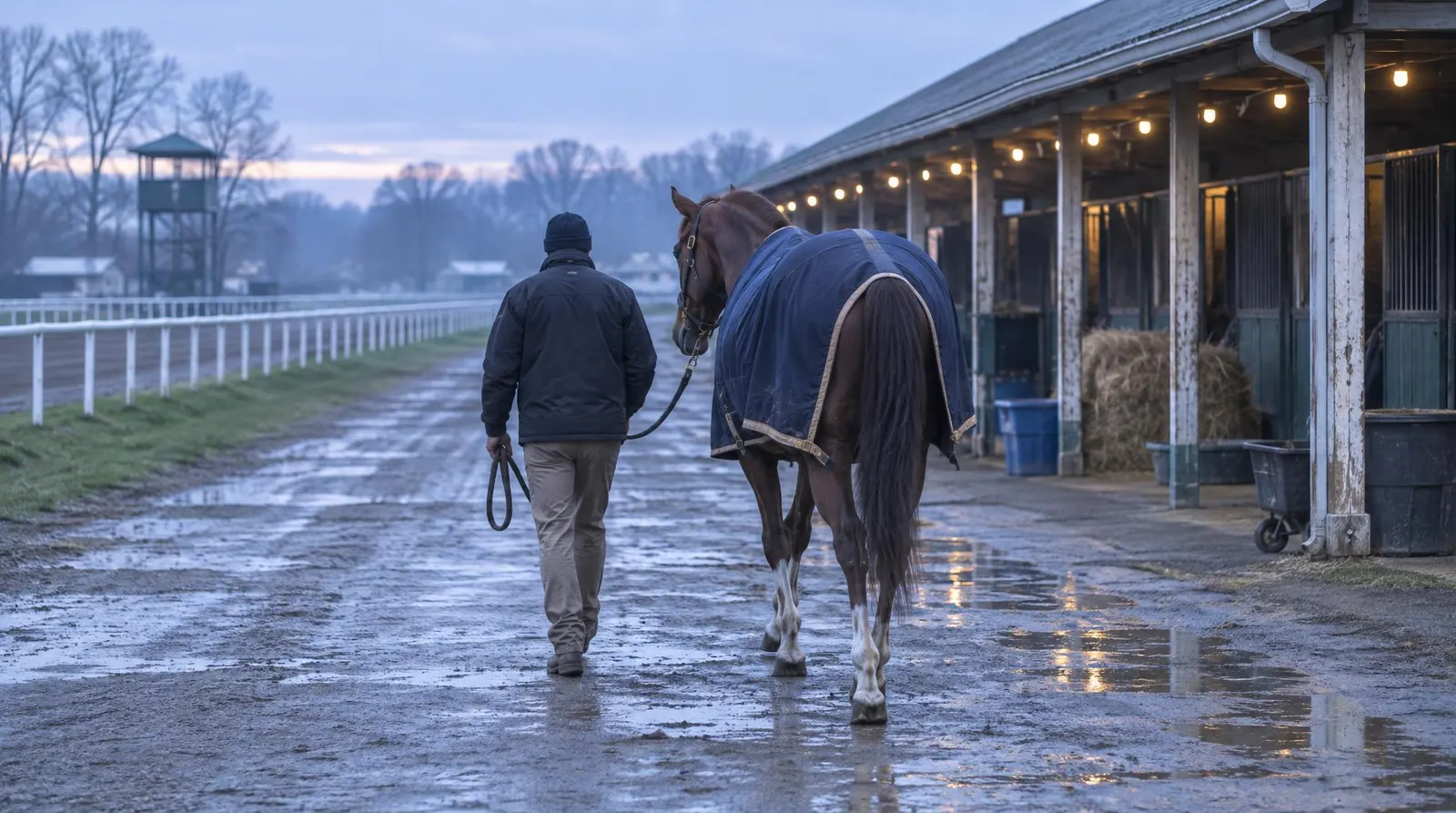
Yes for TB-500 and thymosin beta-4: racing laboratories have detected TB-500 in horse urine and plasma since a 2012 Hong Kong Jockey Club paper, and a 2025 French study sets out how labs separate a horse's own thymosin beta-4 from a dose. For BPC-157, no published equine detection paper turned up, and the detection papers that do exist use human samples.
How do labs detect TB-500 in horses?
With liquid chromatography and mass spectrometry, run on urine and plasma. The Hong Kong Jockey Club racing laboratory built and validated a method to confirm TB-500 and its metabolites in horse samples, and its paper reports "the first identification of TB-500 and its metabolites in post-administration samples from horses" (Ho et al., 2012, Journal of Chromatography A).
What the lab looks for is a small molecule. TB-500 as racing labs define it is the N-acetylated seven-amino-acid stretch LKKTETQ, a piece of thymosin beta-4. The paper opens by describing "a veterinary preparation known as TB-500 and containing a synthetic version of the naturally occurring peptide LKKTETQ." A Ghent University group had pinned that fragment down in a commercial TB-500 product the same year, working on the product itself and not on horses (Esposito et al., 2012, Drug Testing and Analysis).
A year later the Hong Kong lab folded TB-500 into a plasma method for seven bioactive peptides and found the parent compound and a metabolite in samples from two Thoroughbred geldings (Kwok et al., 2013, Analytical and Bioanalytical Chemistry). So a lab screening plasma for several peptides at once doesn't need a separate test for each.
Trade press from the U.S. side points the same way. In 2013 The Horse reported an RMTC notice saying TB-500 and another product "should be treated as an Association of Racing Commissioners Class 1 substance (highest level violation)" (The Horse, July 3, 2013). That is a trade report of the notice, and we did not retrieve the notice itself.
How do labs tell natural thymosin beta-4 from a dose?
Horses make thymosin beta-4 themselves, so a lab can't flag it just because it shows up. A 2026 plasma study of 49 Arabian and Thoroughbred racehorses found it there and saw it shift with the training phase (Grzedzicka et al., 2026, Equine Veterinary Journal).
The French racing laboratory (Laboratoire des Courses Hippiques) took that problem on directly. It measured natural thymosin beta-4 in the blood of a population of racing horses and reported that levels "did not significantly depend on sex, age or breed." It also found levels were higher in plasma left sitting on the blood cells at 4 degrees C, which makes sample handling part of the test. And after a product containing thymosin beta-4 was given, a synthesis impurity could be detected in plasma, a marker a lab can look for to separate a given product from the horse's own supply (Delcourt et al., 2025, Drug Testing and Analysis).
The same abstract says the peptide is "yet non-authorized" as a medicine and "forbidden by the IFHA, the FEI, and the WADA," and that labs "reported numerous products available online claiming to contain a synthetic acetylated fragment of TB4 or TB4 itself."
That last point is why reading a vial's certificate is worth the trouble, and the last section comes back to it.
Has anyone published a BPC-157 test for horses?
No. A PubMed search for BPC-157 together with horse, equine or racehorse turned up no paper that combines the two, and a search on BPC-157 doping-control detection returned two results, both methods built on human samples.
That doesn't prove no lab has a method. Conference abstracts, lab bulletins and unpublished validation work wouldn't show up in PubMed, and a racing-lab web search wasn't part of this check. What can be said is that no published equine detection method for BPC-157 was found, and so there is nothing here to cite for what a racing lab can or can't see.
It also doesn't make BPC-157 a safe harbor in competition. The rule books don't name it, but their catch-all clauses are written for substances like it. The companion page on whether peptides are legal for horses quotes those clauses in full.
How long does TB-500 stay detectable?
No published detection window appears in the sources behind this page, so none is given here.
The papers above show that a lab can find TB-500 and its metabolites in urine and plasma from horses that were given it, and that the French lab found an impurity marker in plasma. None of the abstracts we read states how long after a dose a horse stays positive, and that kind of figure depends on the method, the matrix and the sample. Any number you see on a vendor page without a citation to a validation study is a guess, and a guess is a poor thing to base an entry on.
If you need a real answer for a real horse, the people who hold it are the testing laboratory for your discipline and your veterinarian, not a web page.
Which rule books name thymosin?
HISA, the FEI and the ARCI model rules each name it. USEF's own rule doesn't, but it hands FEI-recognized events to the FEI list.
- HISA (Thoroughbred racing): the prohibited-list table in the Federal Trade Commission's notice of the HISA Anti-Doping and Medication Control Rule lists "Thymosin" in class S2, "Peptide hormone," with the note "Lacks FDA approval." It is a Banned Substance, prohibited at all times (Federal Register Vol. 88, No. 17, January 26, 2023). That is the 2023 version published for comment, and we did not retrieve a later amended list.
- FEI: the 2026 Equine Prohibited Substances List has the row "BANNED Thymosin (synthetic fragments)" and a "BANNED Growth Factors" row, and its preamble adds that prohibited substances "include any other substance with a similar chemical structure or similar biological effect(s)" (FEI, 2026 list). The 2025 list carries the same rows.
- ARCI model rules (racing outside Thoroughbreds): possession or use of the listed substances on the grounds of a racetrack "is forbidden," and the list includes "Thymosin beta" (ARCI Model Rules of Racing, Version 15, August 10, 2026). A state racing commission has to adopt the model rules for them to bind.
BPC-157 is not named in any of the three. The full set of quotes, the S0 carve-out and the USEF wording are on the rules page, and the rules hub lists the rest. HIWU's substances page is where to look up a name against the current HISA list.
What should a competing owner know first?
That the duty to know sits with you. The FEI's anti-doping rules say it is "the responsibility of all Persons Responsible and/or member of the Support Personnel and/or other Person to familiarize themselves with the most up-to-date version of the Prohibited List" (EADCMRs, 4th Edition, Art. 4.2).
And that HISA and the FEI list thymosin as banned at all times, in competition and out of it, so for a horse under either code the question is already answered. For a horse outside any competition code, the vial is the question left. TB-500 is sold as the short fragment by some sellers and as the full 43-amino-acid protein by others, and the certificate is how you tell which one you have. The TB-500 explainer covers the difference, and how to read a peptide certificate of analysis covers the lines to check. Pure Pet Peptide's post on third-party testing explains what the lab's certificate does and doesn't show.
For an owner whose horse is outside a competition code, the CAS number on the certificate is how you know which molecule you bought. Pure Pet Peptide's TB-500 is full-length thymosin beta-4 (CAS 77591-33-4) on its Horizon Analytical UPLC/MS certificates.
Each vial carries a QR code that opens the certificate for its lot, and report numbers can be checked on Horizon Analytical's verify page. The store keeps its verified lots in one table.
If your horse competes, search your discipline's current list for "thymosin" by that name and by TB-500 before anything else.
FAQ
Can a horse test positive for TB-500?
Yes. Racing laboratories have published methods that detect TB-500 and its metabolites in horse urine and plasma, from Hong Kong in 2012 and 2013. Whether a given horse tests positive at a given time isn't something the published abstracts answer.
Can a horse test positive for BPC-157?
No published equine detection method for BPC-157 turned up in this check, and the BPC-157 detection papers found use human samples. BPC-157 isn't named in the HISA, FEI or ARCI text, but their catch-all clauses cover substances without approval or with a similar effect.
Does a horse's own thymosin beta-4 cause a false positive?
Horses make it naturally, so labs have to tell it from a dose. The 2025 French study measured natural levels in racehorses and reported a synthesis impurity in plasma after a product containing thymosin beta-4 was given, which is the kind of marker labs use for that.
Is there a published detection time for TB-500 in horses?
Not in the sources behind this page, so none is stated. Ask the testing laboratory for your discipline.
Sources
- Ho et al., 2012. Doping control analysis of TB-500, a synthetic version of an active region of thymosin beta4, in equine urine and plasma by liquid chromatography-mass spectrometry. Journal of Chromatography A.
- Kwok et al., 2013. Doping control analysis of seven bioactive peptides in horse plasma by liquid chromatography-mass spectrometry. Analytical and Bioanalytical Chemistry.
- Delcourt et al., 2025. Equine Doping Controls of Thymosin beta4: A Population Study and Strategy for Misuse Detection. Drug Testing and Analysis, from the Laboratoire des Courses Hippiques in France.
- Esposito et al., 2012. Synthesis and characterization of the N-terminal acetylated 17-23 fragment of thymosin beta 4 identified in TB-500, a product suspected to possess doping potential. Drug Testing and Analysis.
- Grzedzicka et al., 2026. Exercise-specific plasma proteomic signatures in racehorses: Candidates for training adaptation and peak load monitoring. Equine Veterinary Journal.
- Federal Trade Commission, 2023. HISA Anti-Doping and Medication Control Rule, Federal Register Vol. 88, No. 17, January 26, 2023.
- FEI, 2026. Equine Prohibited Substances List.
- ARCI, 2026. Model Rules of Racing, Version 15, August 10, 2026.
- FEI, 2025. Equine Anti-Doping and Controlled Medication Regulations, 4th Edition, effective 1 January 2025.
- The Horse, 2013. Stiff Penalties Tied to Drugs "Purple Pain," "TB-500."
Read next
Are peptides legal for horses?
No peptide such as BPC-157, TB-500 or GHK-Cu has an FDA animal drug approval. Whether a horse may carry one depends mostly on whether it competes.
BPC-157 or TB-500 for a horse's tendon: which has more research?
By the published record TB-500 and thymosin beta-4 have the broader research base, and the one rat tendon head-to-head favoured TB-500. No horse trial exists.
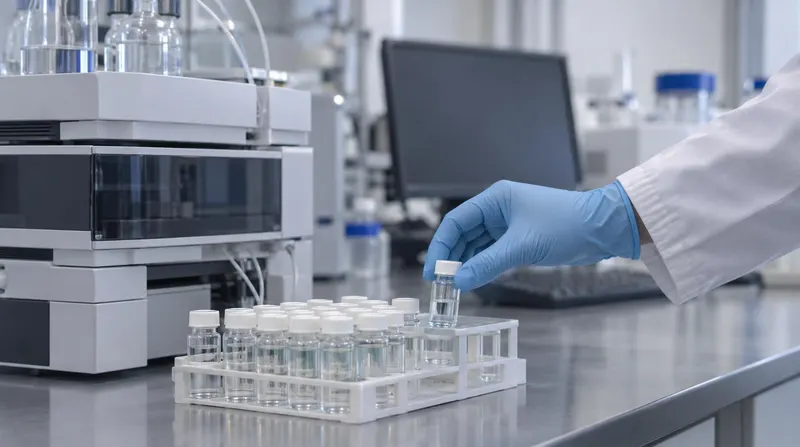
How can you tell if the peptides you bought are real?
Not from the vial. Match its lot number to a named lab's certificate, read the identity, purity and measured-amount lines, then confirm the report at the lab.